Material
The perfect material
for robotics
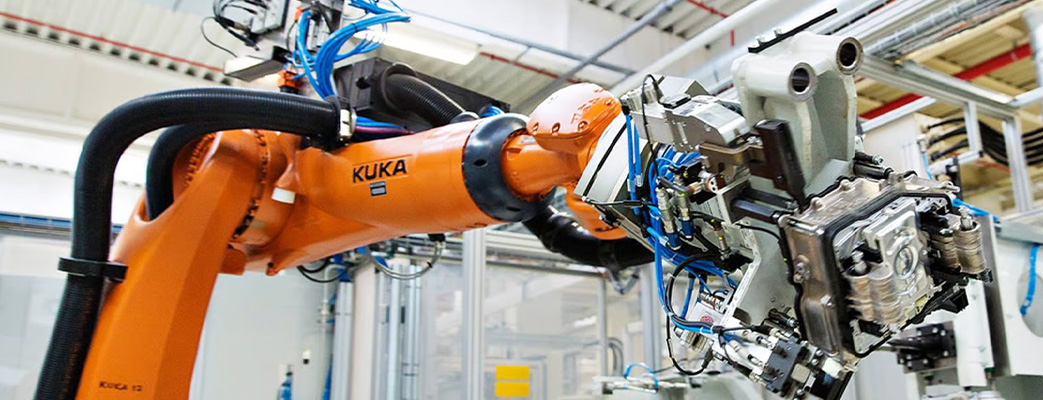
Aluminum meets all the requirements for use in industrial robots. In industrial automation, the focus is on fast and computer-controlled motion sequences. Here, aluminum is the ideal material. It fulfills the high demands for versatility, stability, stiffness, and lightness. This is especially important under the high G-forces of high-performance robots.
Robotics
Lightweight Construction
Lightweight construction for higher load capacity
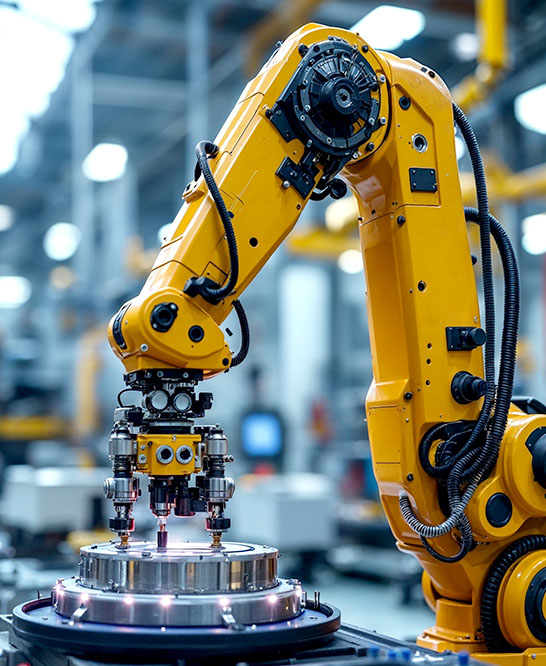
Modern industrial robots must move quickly to be efficient. Therefore, lightweight construction is essential in robot manufacturing. A typical material is aluminum—a multitasker with many first-class properties and practically predestined for robotics. Intensive use of aluminum can reduce robot weight by up to two-thirds, thus increasing the payload.
Characteristics
Characteristics
What are the advatageous properties for aluminum castings in robotics?
- Aluminum reduces the self-weight of robots
- Aluminum is corrosion-resistant for use in aggressive environments
- Aluminum casting allows robot shapes to be ideally adapted to load requirements based on FEM calculations in the design phase

Examples of aluminum
casting in robotics
Examples
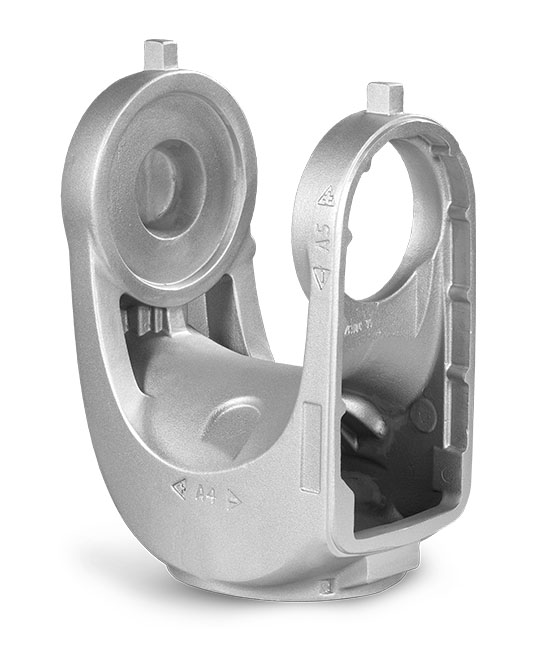
- Arms
- Carousel housings
- AGV platforms
- Swivels
Which casting processes does Thoni
Alutec offer for robotics?
Casting processes
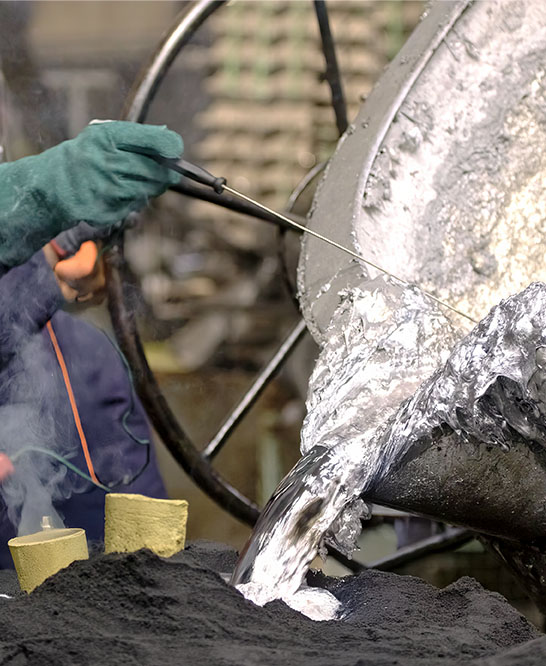
- Sand casting with 3D sand printing (prototypes)
- Sand casting using air setting resin moulding process's (no-bake process)
- Sand casting with automatic moulding line
- Gravity die casting
- Low-pressure die casting
- Low-pressure sand mould casting technology

Got any questions? Or need advice?
Use the form or contact us